Blog
Latest news about AUTO1 Group
Key Insights from AUTO1.com’s 2025 EV Trends and What They Mean for Europe’s Used Car Market
29 June 2026

2025 brought another year of record growth for used electric vehicles across Europe, but numbers only tell a part of the story. As the continent’s appetite for greener mobility grows, the market landscape is evolving in new and sometimes unexpected ways: from cross-border trading hotspots emerging in Portugal and Romania to the rising confidence of mainstream brands and early-adopting dealers. AUTO1.com’s latest EV Trends report provides the most comprehensive look yet at how used EV trading is evolving—not just in numbers, but in business models and buyer expectations.
The EV Market Growth is More Than Just Numbers
In 2025, AUTO1.com facilitated the trading of 29,100 used EVs[1] across Europe, which is a remarkable 57% increase over 2024. Just as significant, 75% of these transactions were cross-border, reflecting clear differences in buyer preferences and infrastructure across European markets, especially when compared to traditional petrol and diesel vehicles. This international dynamic enables dealers to match the right vehicles with the right customers, wherever demand arises.
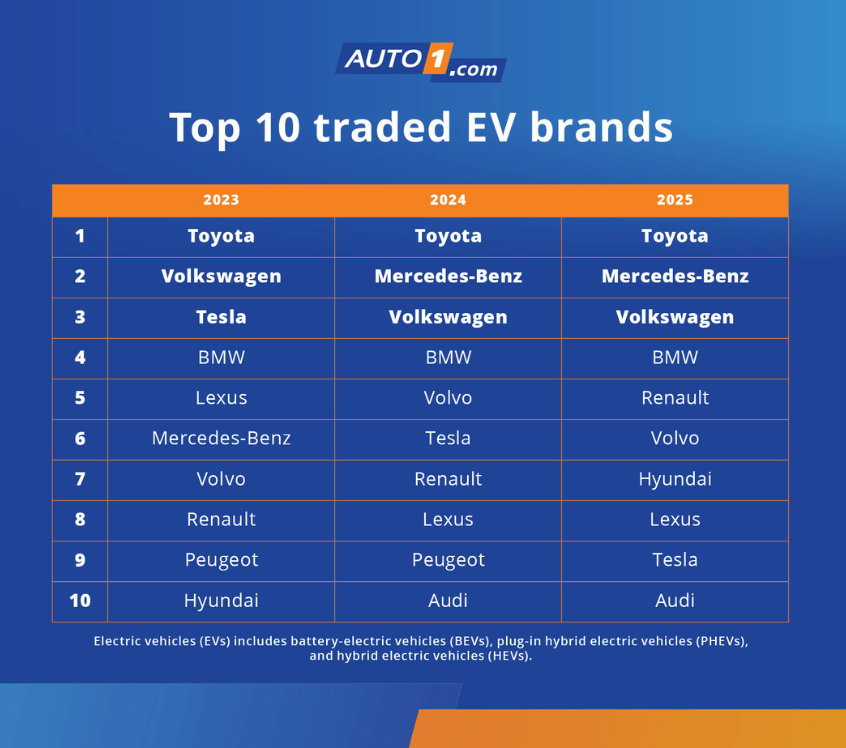
But what’s driving this growth? Industry mainstays such as Toyota, Mercedes-Benz, Volkswagen, and BMW dominate the used EV landscape, signaling that electric mobility is mainstream, not marginal. At the same time, we are witnessing the growing presence and influence of Chinese manufacturers in the European market. These newer entrants are rapidly gaining traction, particularly in markets open to innovative technology and competitive pricing. “More dealers see value in looking beyond their local inventory. With incentives and charging infrastructure developing at different rates across the continent, cross-border trading helps balance supply with demand and keeps pricing transparent for everyone,” explains Chris Vlachos, Chairperson of the AUTO1 Group EV Community.
The Role of our Pan-European Platform
This transformation is made possible by the reach, scale, and transparency that platforms like AUTO1.com deliver. “Many dealers have yet to fully realize the significant opportunities available by actively trading EVs,” says Moritz Lück, SVP Sales and Operations at AUTO1 Group. “Through our unique network of 60,000 dealer partners operating in 30 markets, paired with multiple selling channels and seamless cross-border access, we empower dealers to tap into pan-European opportunities and achieve the best possible prices. We provide the tools, data insights, and logistics infrastructure that dealers need to confidently navigate this transition and maximize the value of every EV, regardless of make, model, or age.”
Emerging markets like Portugal and Romania stood out for their exponential growth in 2025, joining established leaders such as the Netherlands, France, and Spain. This cross-border dynamism allows surpluses in established markets to meet rising demand in places where infrastructure and policy are quickly catching up. It also demonstrates the advantage of a platform that can connect supply and demand beyond borders.
Dealer Voices: From Early Adopters to Everyday Business
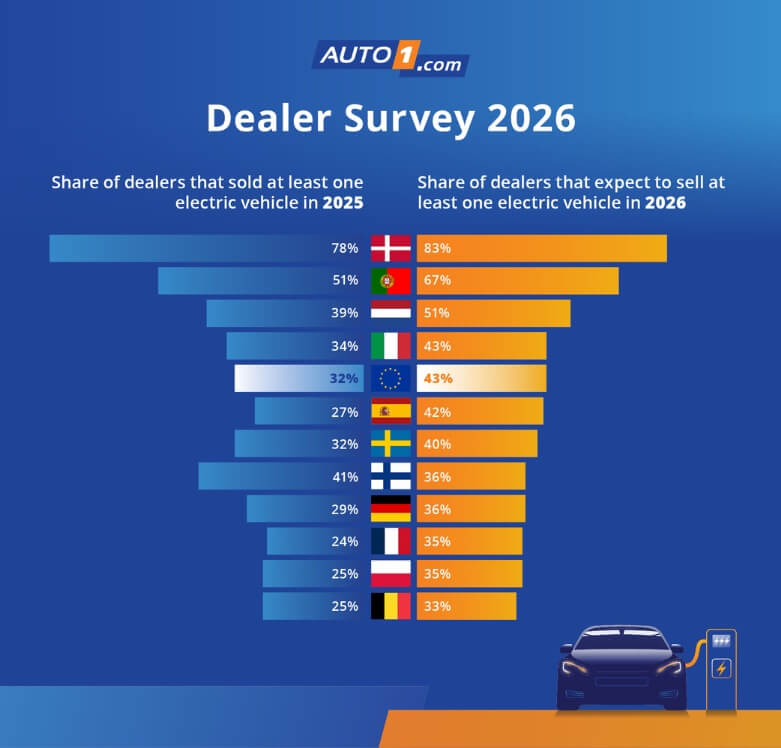
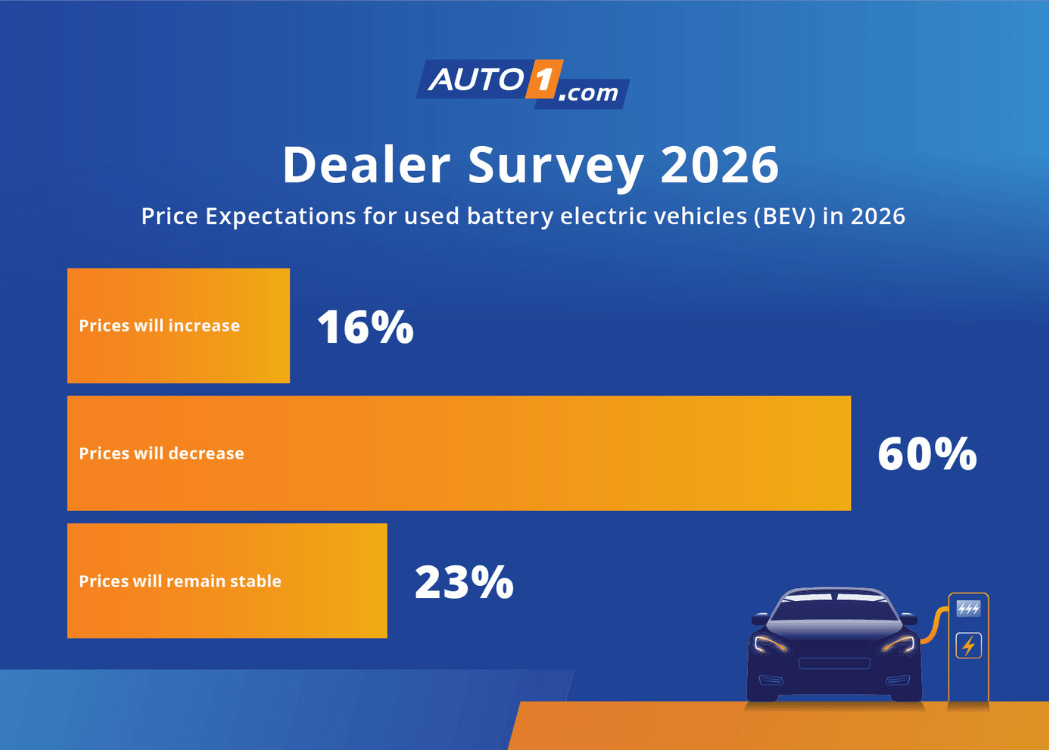
On the front lines, dealer attitudes toward EVs are changing fast—but not uniformly. While an expanding core of early adopters traded significant volumes in the past year, the majority of partners are just beginning to explore this category. There is a sense of momentum as experience grows, and conversations across our network suggest the focus is shifting from “should I?” to “how can I best succeed?” There’s widespread anticipation around price movements and market expansion. Many dealers expect used EV prices to decrease as more young post-lease vehicles hit the market, making EVs more affordable and accessible for a wider segment of customers—including first-time buyers and value-seekers.
Looking Ahead
What’s next for Europe’s used EV market? Many dealers expect prices to decline further in 2026 as a wave of young, post-lease vehicles enters circulation. This will make used EVs more accessible to a wider range of customers, stimulating demand while posing new questions around inventory management and resale value. As the market develops, the ability to share expertise and learnings across the community will remain essential to staying ahead. At AUTO1.com, we’re committed to supporting dealers every step of the way—providing cutting-edge market data, integrated logistics, and a motivated team that supports them daily.
EV Prices Surge in Q2 2026
Adding to this forward outlook, the most recent results from AUTO1 Group’s mid-year Fuel Type Index in June 2026 provide the latest snapshot of price dynamics across fuel types. As Q2 2026 concludes, used EV wholesale prices are experiencing a notable upswing across Europe - a trend not observed for petrol or diesel.
EV prices rose 18.5% from January to June, as the EV Index reached 116.1, a 10.8% jump in Q2 compared to Q1 of this year, highlighting strong demand for electric vehicles. In contrast, petrol prices stayed flat (-0.1%) quarter-over-quarter and diesel prices declined 1.6% from Q1 to Q2.
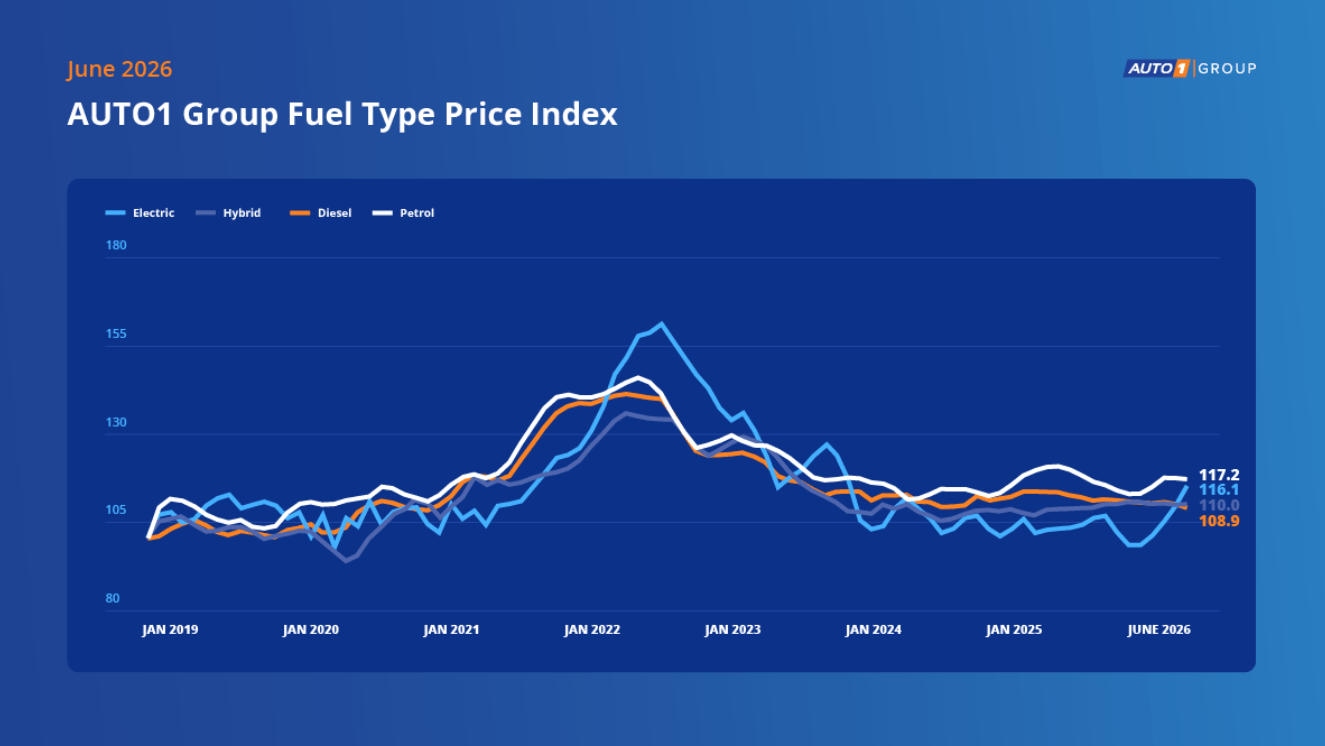
“Our data shows growing buyer interest in battery electric vehicles, partly due to rising fuel prices," Moritz shares. "This translated directly into stronger wholesale demand and higher prices for used electric cars across Europe in the second quarter. The coming months will show whether this marks a true shift toward greater electrification or whether increasing supply from more off-lease vehicles entering the market will bring prices down again."
Curious how we build the EV Trends Report? If you want to see how these insights come together—from raw data to actionable analysis—take a look at last year’s Behind the Data feature. It’s an inside look at the teamwork, advanced analytics, and market expertise behind every figure in the report. For more information on the AUTO1 Group Price Index, visit our website.
- In this analysis, AUTO1.com defines electric vehicles (EVs) as a unifying term for battery-electric vehicles (BEVs), plug-in hybrid electric vehicles (PHEVs), and hybrid electric vehicles (HEVs). ↩